ARATAKI
Brand Strategy, Augmented Reality, UX Design
A concept app that finds a nearby heritage site, then holds a phone up to it and shows what stood there through AR. Built for a 2020 brief on designing New Zealand's response to a collapse in tourism, using a real Wellington storytelling company as a brand reference point.
- Drawing title
- Sheet 04-03
- Organisation
- Role
- Year
- Location
- Sector
- Status
Background
INDN 390, Branded Products, the capstone course of the Bachelor of Design Innovation. The brief, written for a New Zealand tourism sector gutted by COVID-19, asked students to pick a real company and design a brand-consistent product or service that responded to the pandemic, on the explicit condition that the company was a reference point only: no claimed collaboration, no use of its actual branding.
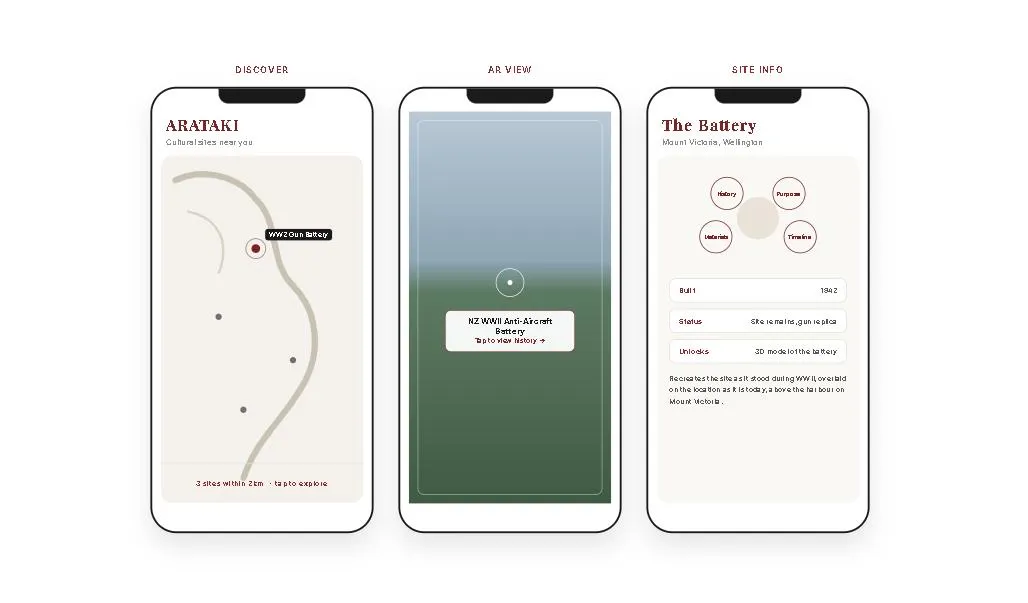
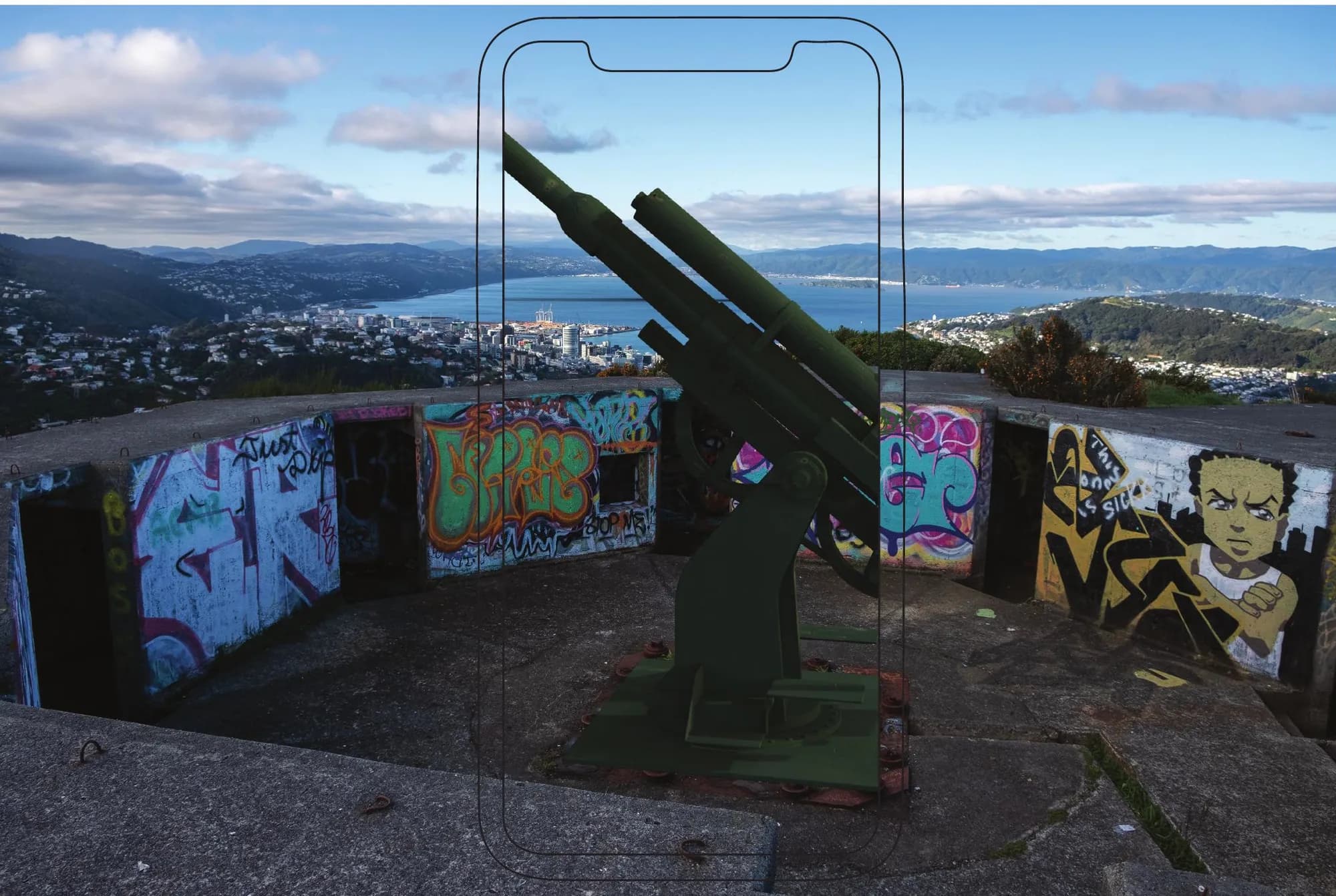
The company chosen was Vaka Interactiv, a real Wellington studio whose work uses interactive technology to tell cultural stories, including an installation for Te Papa. ARATAKI extends that idea into an app: it finds culturally significant or lost heritage sites near the user, and holds a phone up to one to show an AR recreation of what stood there. The worked example throughout the proposal is a WWII anti-aircraft battery on Mount Victoria, above Wellington: point the app at the gun emplacement that remains today and it overlays the battery as it operated during the war.
The problem
The proposal was argued well in the original deck but never demonstrated as an interaction: every page describes what the app would do, and none show what using it would actually look like on a screen. The original pitch also extended the idea into a 3D-print-and-chocolate-mould souvenir tie-in with a second real company, Wellington Chocolate Factory, which pulled focus from the app interaction that is the actual idea worth keeping.
What I built
Three screen mockups of the core loop, built to be read as a flow rather than a pitch: a discovery map that surfaces nearby sites, an AR camera view that tags a real-world location with what it recreates, and a site detail screen. The worked example stays the Mount Victoria battery, read directly from the original proposal.
Both companies named above are named on the basis the original brief set: reference points that shaped the brand and the tone, not an actual product or collaboration from either.
Outcome
Narrowing this to the AR loop rather than the full souvenir pipeline makes clearer what the idea actually is: a way to stand at an ordinary site and see what used to be there, not a merchandise system.
The premise holds up better now than it did in 2020. A gun emplacement above a harbour, covered in graffiti and passed daily by people who have no idea what it was, is exactly the case for putting the history back on the spot instead of in a museum across town.