UV-C Door Handle
Product Design, Visualisation
A self-sanitising door handle concept: a hidden UV-C light triggers for 30 seconds after each use, detected by a tilt sensor, in a form designed to disappear into a modern interior rather than read as medical equipment. Never built: the brief marked on the visualisation.
- Drawing title
- Sheet 04-06
- Organisation
- Role
- Year
- Location
- Sector
- Status
Background
INDN 311, Publishable Products. The brief asked for a visualisation of a small product, judged to the standard of a real design publication rather than as a coursework render. Trend research pointed at hygiene, driven directly by COVID-19, and settled on the door handle: a surface touched constantly, shown in the research to transfer bacteria across most of a building within hours of contamination.
What I built
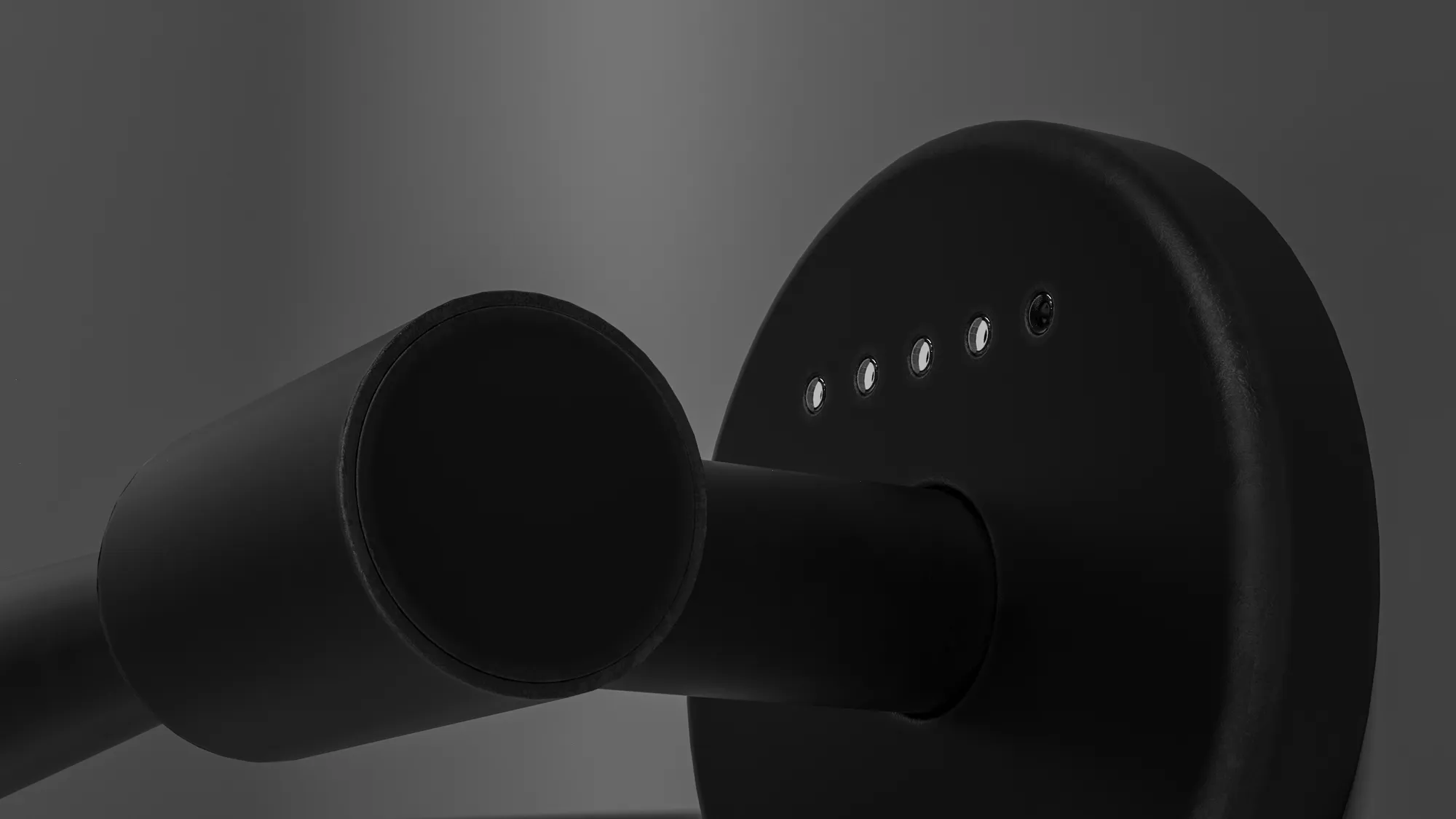
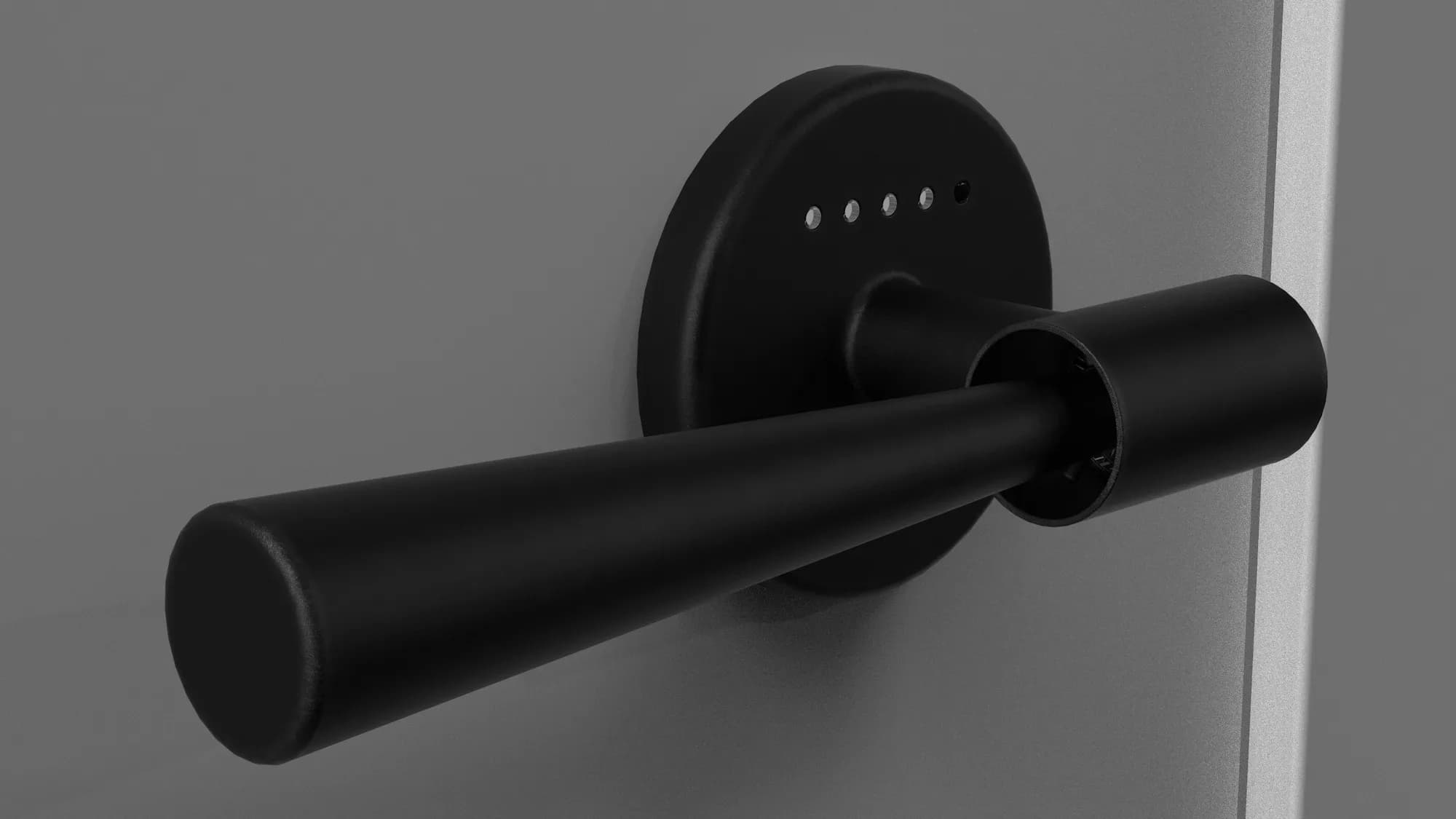
A door handle with a UV-C emitter inside it, hidden rather than presented as a visible gadget.
A tilt sensor detects that the handle has been turned and starts a 30-second cycle, long enough to kill bacteria on the surface, then shuts off. Nobody presses anything and nobody remembers to do anything: the act of using the handle is what cleans it, which is the only version of this that would survive contact with an actual household. Five LEDs on the rose double as a battery gauge, and the light and battery sit in one module that clicks out of the handle in any rotation and drops into an external charging dock.
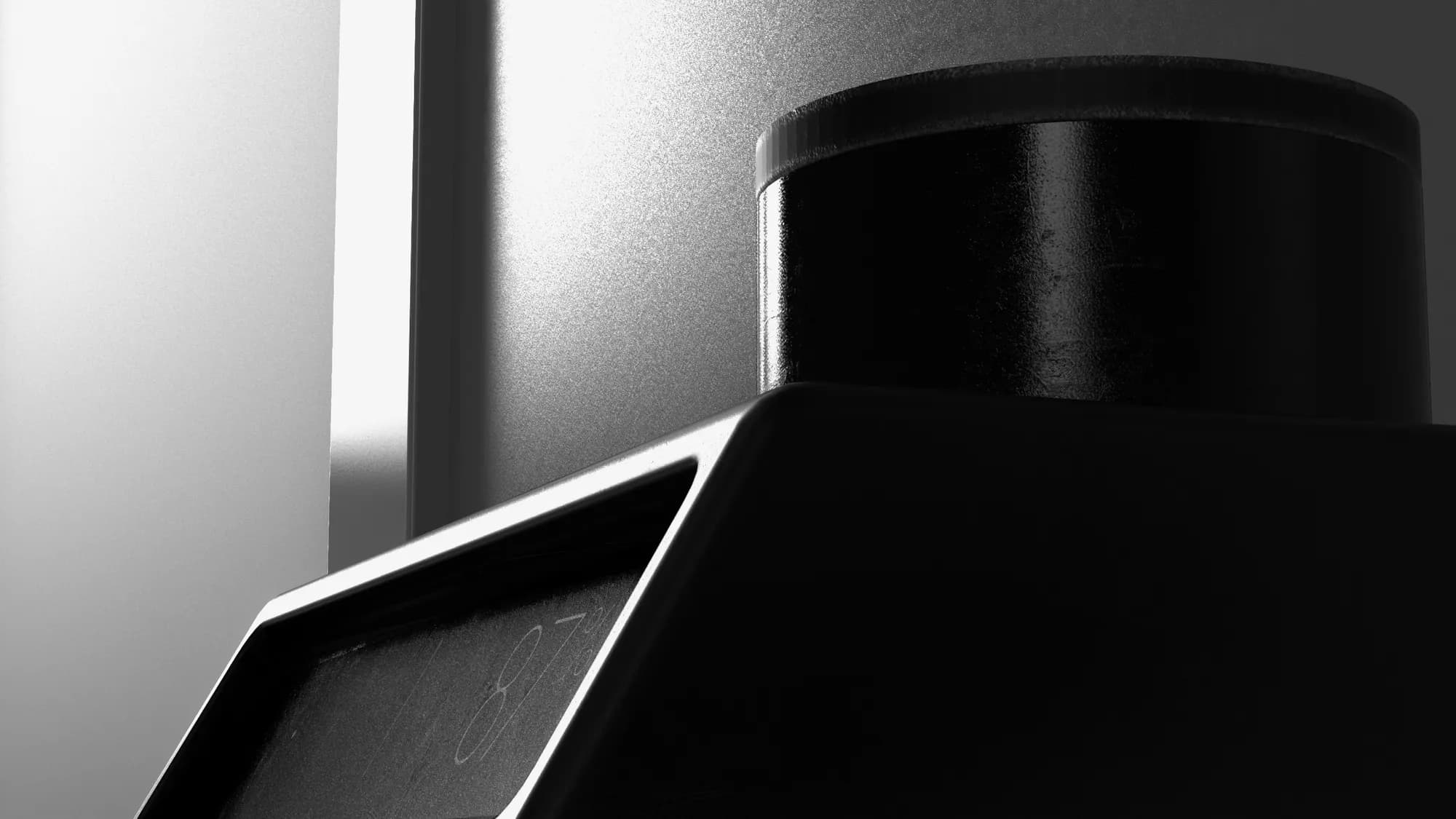
The whole design argument is restraint. Every other hygiene product of that year announced itself, and the wager here was that a self-cleaning handle only gets installed in a home if it reads as an ordinary black handle first.
The problem
This one was never built. The brief marked on the visualisation rather than a working prototype, so what exists is a set of renders and a short CG turnaround, not a physical object.
The design also has an unresolved problem. UV-C light loses too much energy passing through clear plastic to reliably kill germs on the far side, and the fix, a titanium dioxide coating, is a manufacturing step the brief explicitly wanted to avoid. That tension is named in the original process notes and never actually resolved.
Outcome
The concept is coherent and the hygiene case for it holds up, in a form that intentionally reads as an ordinary door handle rather than a piece of sanitising equipment. It stays a visualisation exercise rather than a resolved product, which is what the brief actually asked for.