Forms
Form Studies, Materials Exploration
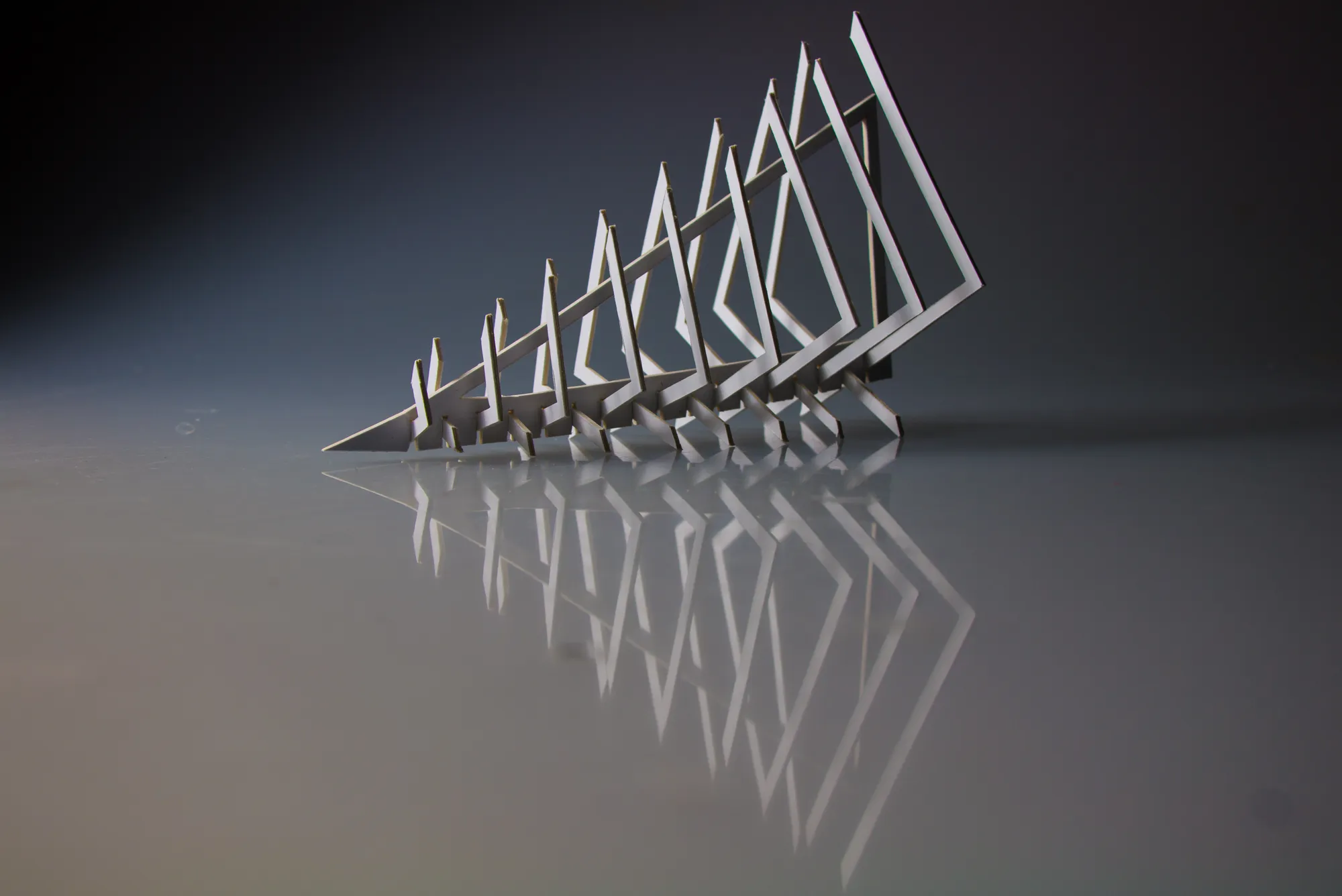
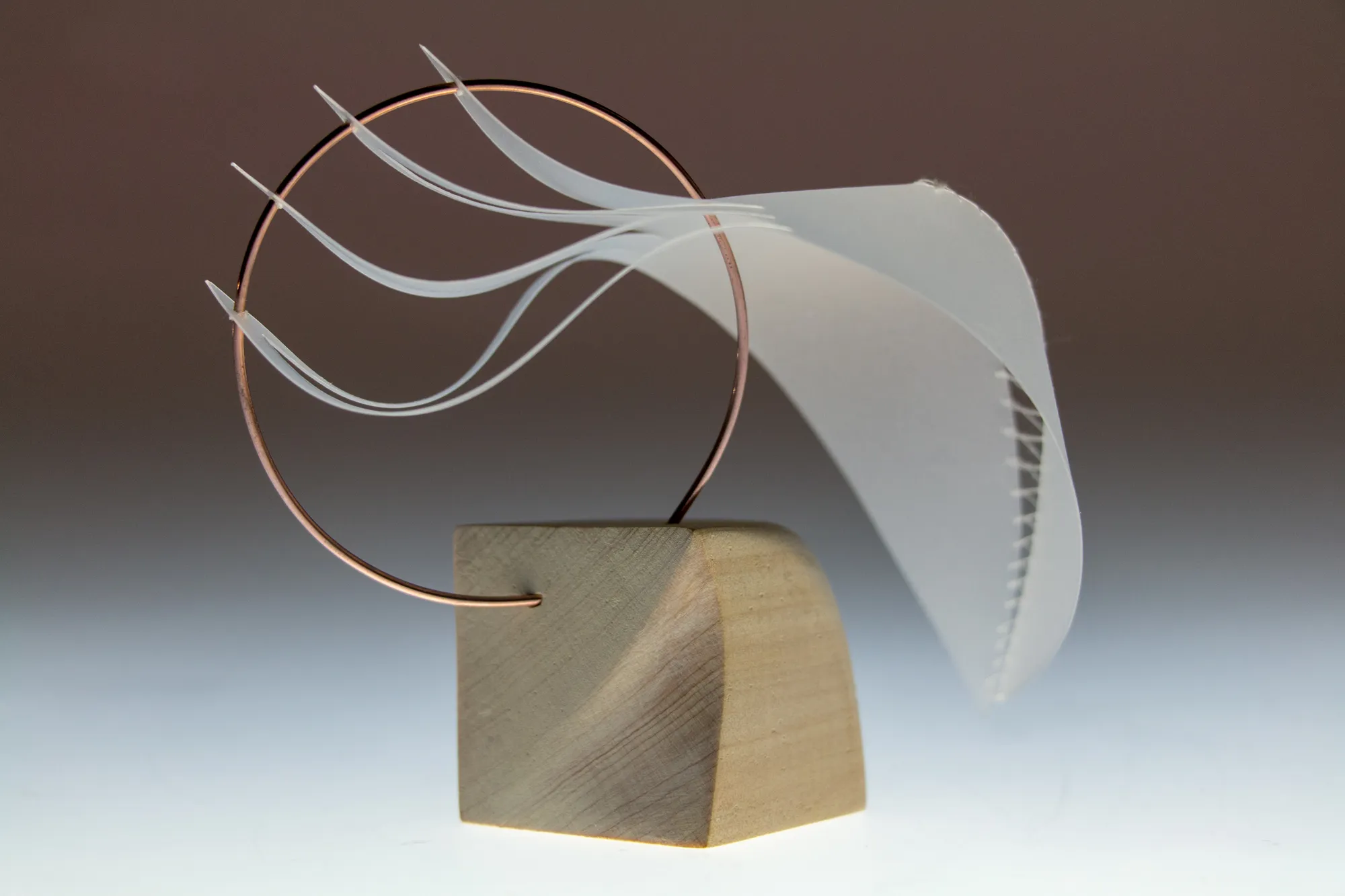
Two first-year form studies: a rhythmic sequence of rotated triangular planes, then a piece built from a Fijian Kauri cube, a copper wire ring and curved translucent plastic, working through density, transition and openness by hand. The earliest work on this site.
- Drawing title
- Sheet 04-10
- Organisation
- Role
- Year
- Location
- Sector
- Status
- Built with
Background
DSDN 111, Ideas and Principles of Design. Two projects. The first is a sequence of triangular card planes, progressively rotated and nested into one another, escalating from a single small triangle to a large open frame.
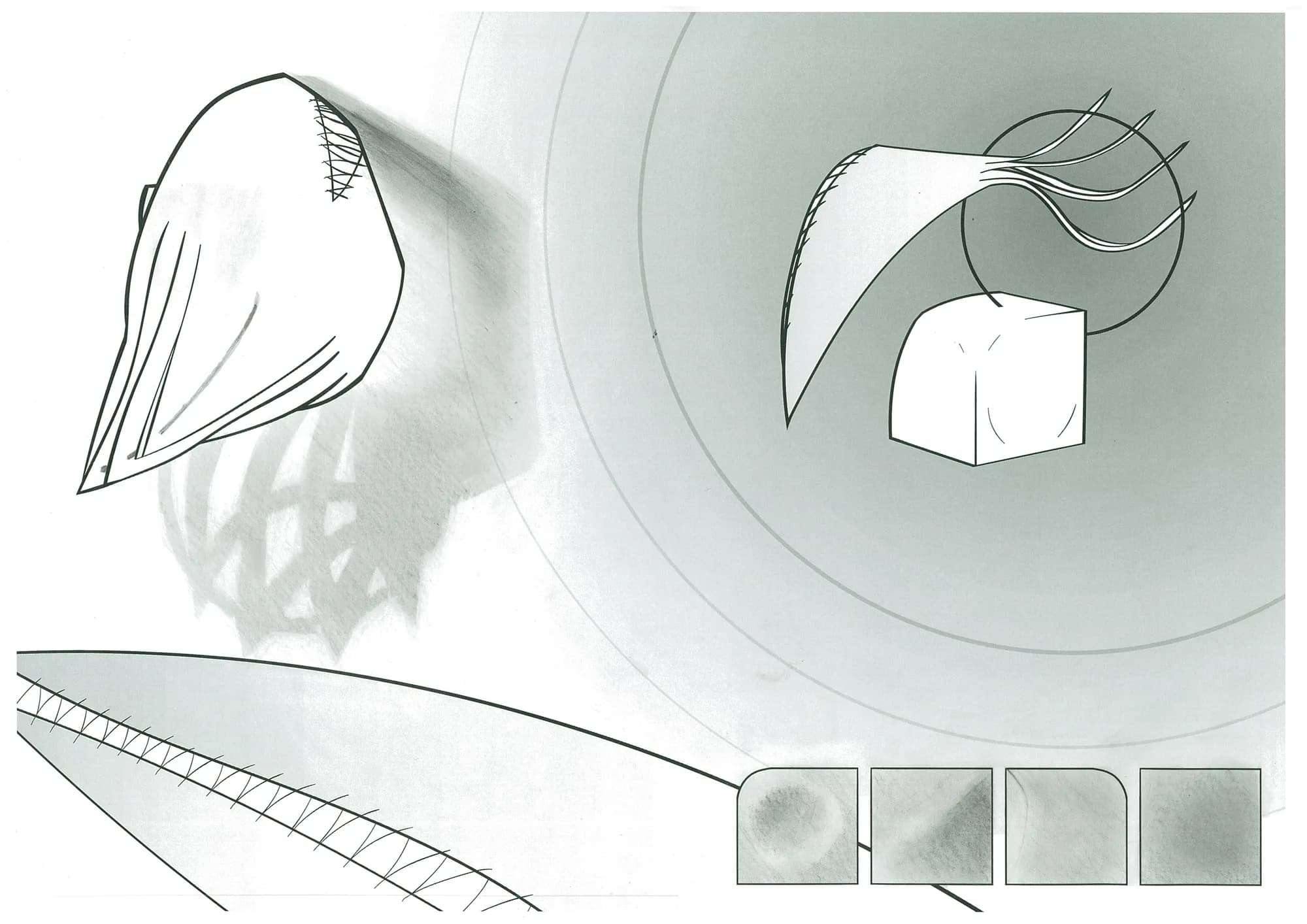
The second, "Fluid Form," asked for an abstract three-dimensional form expressing a transition from density and solidity to sparsity and openness, built around a cube of Fijian Kauri.
What I built
Planner Form is a study in pure repetition and rotation: identical triangular planes, each rotated slightly further than the last, so the sequence reads as a single gesture caught in successive frames.
Fluid Form takes the density-to-openness brief directly. The Kauri cube anchors one end, shaped to curve with a sheet of Rhino plastic rather than sit as a plain block, so the transition from timber to plastic reads as continuous rather than as two parts glued together. A copper wire ring carries the transition onward, and the plastic finishes as a set of curved, thread-lashed fronds that thin out toward the open end. My own submission notes describe the inspiration plainly: a bird's wing, and the way water moves into many different forms. The wood and the plastic are never in direct contact, which is what makes the wire ring read as the actual site of the transition rather than the timber alone.
Outcome
Read together, the two projects are the same design problem approached twice: repetition and rotation of one flat element in Planner Form, then material and structural transition in Fluid Form. The second is the more resolved piece, and the one with a brief, a written rationale, and a presentation drawing to show for it.