Bench
Furniture Design, Construction Detailing
A furniture module for the School of Architecture and Design atrium, built to a shared jointing and dimension standard so units from an entire cohort combine into one long bench. The interface was agreed before anyone designed anything.
- Drawing title
- Sheet 04-07
- Organisation
- Role
- Year
- Location
- Sector
- Status
Background
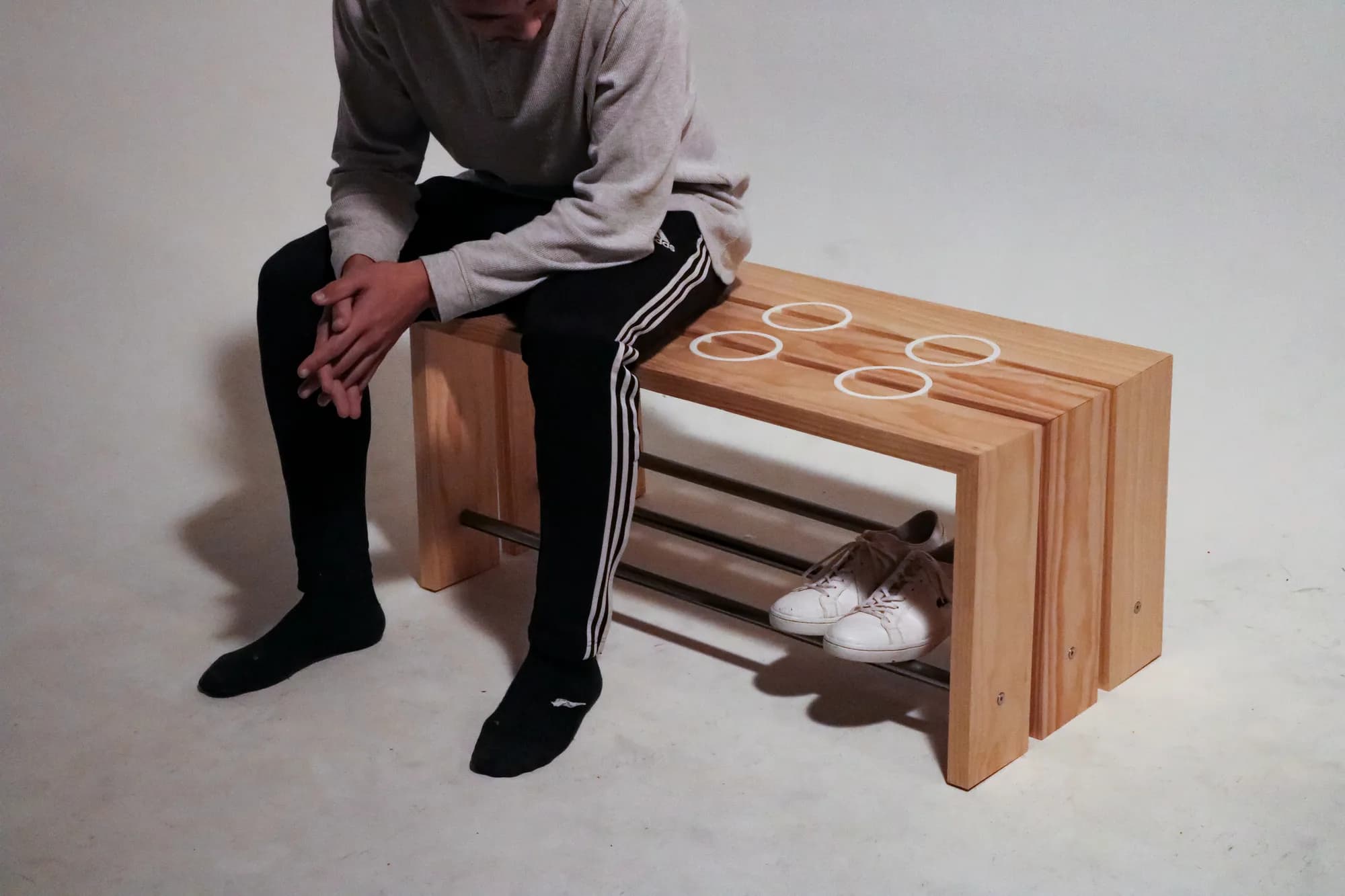
SARC 212, Furniture Design and Construction Technologies. The brief was a shared-interface bench module for the School of Architecture and Design atrium: every student in the cohort designed their own unit, but all of them had to meet a fixed seat height, a minimum width and a common cam and dowel joint, so that whatever anyone designed would still join edge to edge with everyone else's into one continuous bench.
What I built
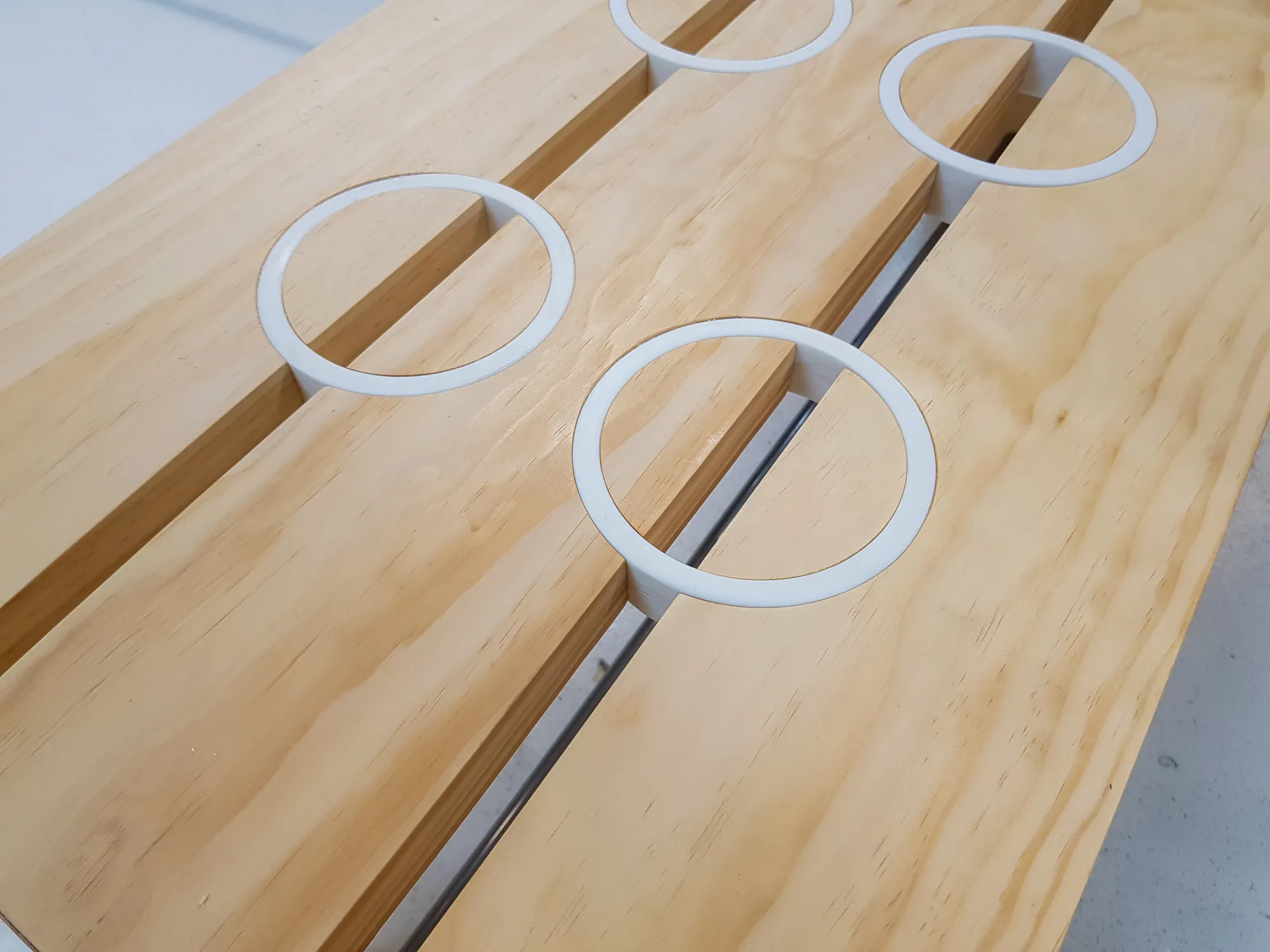
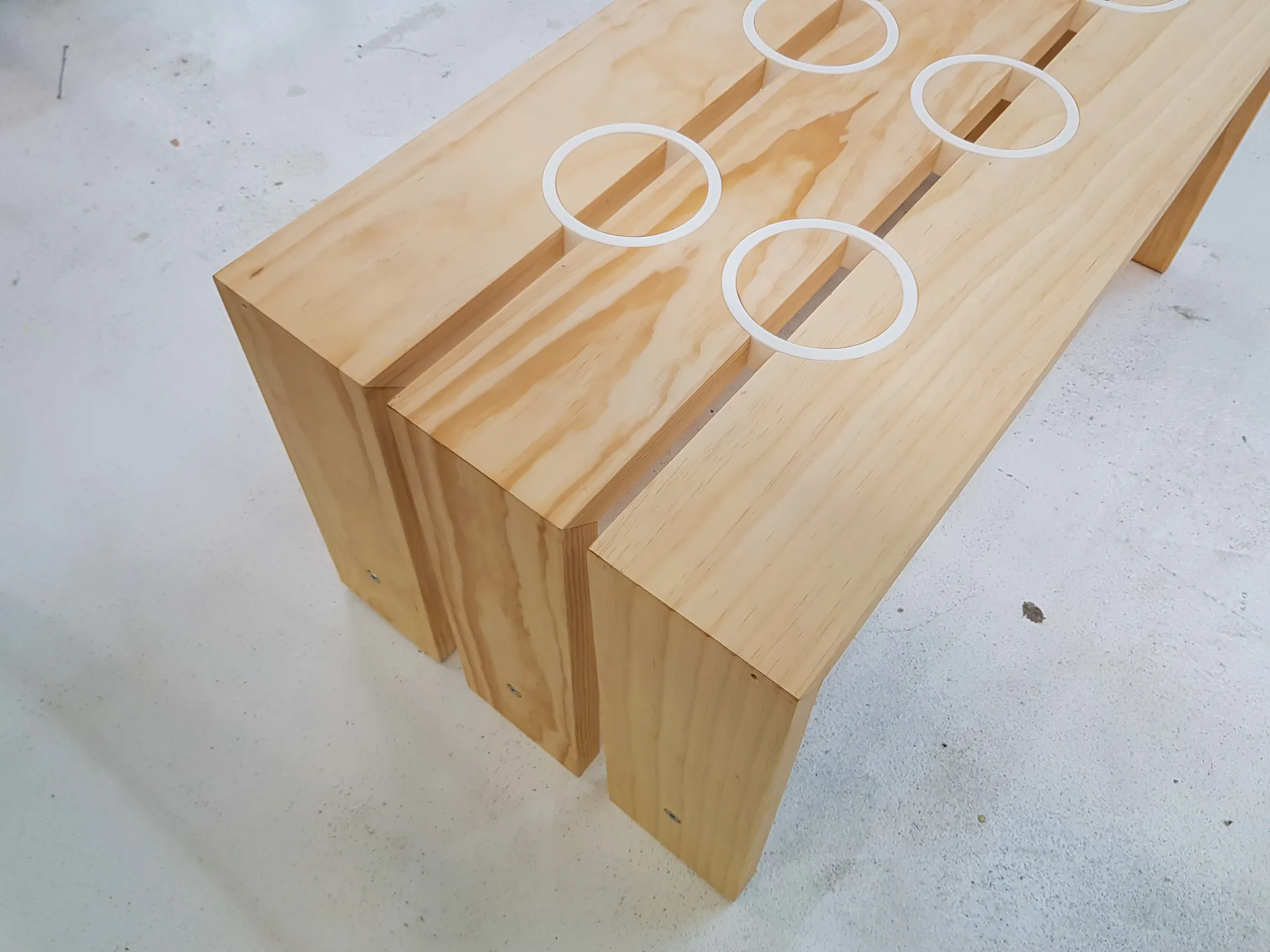
A solid radiata pine module with a three-plank slatted top, four white 3D-printed ring pulls set into the gaps between the slats, and a chrome rail slung underneath that doubles as a shoe or bag shelf.
The brief fixed the seat height, the minimum width and the joint, which is most of what usually distinguishes one bench from another. What it left open was the top surface and whatever happened in the gaps between the planks, and that is where the ring pulls came from: the one detail on the module that is entirely its own, and the only thing a person walking past would use to tell this unit from the one bolted to it.
Outcome
The interface constraint is what makes the piece worth showing seven years on: every dimension and jointing decision had to hold up a metre away from a stranger's unrelated design and still read as one bench. That is a constraint I now meet constantly in a different form, where the thing that has to line up is somebody else's model or data rather than their joinery, and the discipline is the same one: agree the interface first, then design freely behind it.